The Secret Life of Mistbelt Mushrooms
We explored the wildly overlooked, beautiful world of bright blue mushrooms, new-to-science species, medicinal fungi and even so-called “zombie fungi” that grow from insects.
 by
Accacia Foggin
· · Updated · 4 min read
by
Accacia Foggin
· · Updated · 4 min read

After rain in the Dargle, the forests change completely. The air cools, the earth darkens, and the pine needles soften underfoot. Mist settles low between the trees, and suddenly, almost overnight, the forest floor begins to fill with life. Tiny orange cups appear on fallen branches. Delicate purple mushrooms emerge beside roots and stones as though they had always been there, waiting quietly beneath the surface.
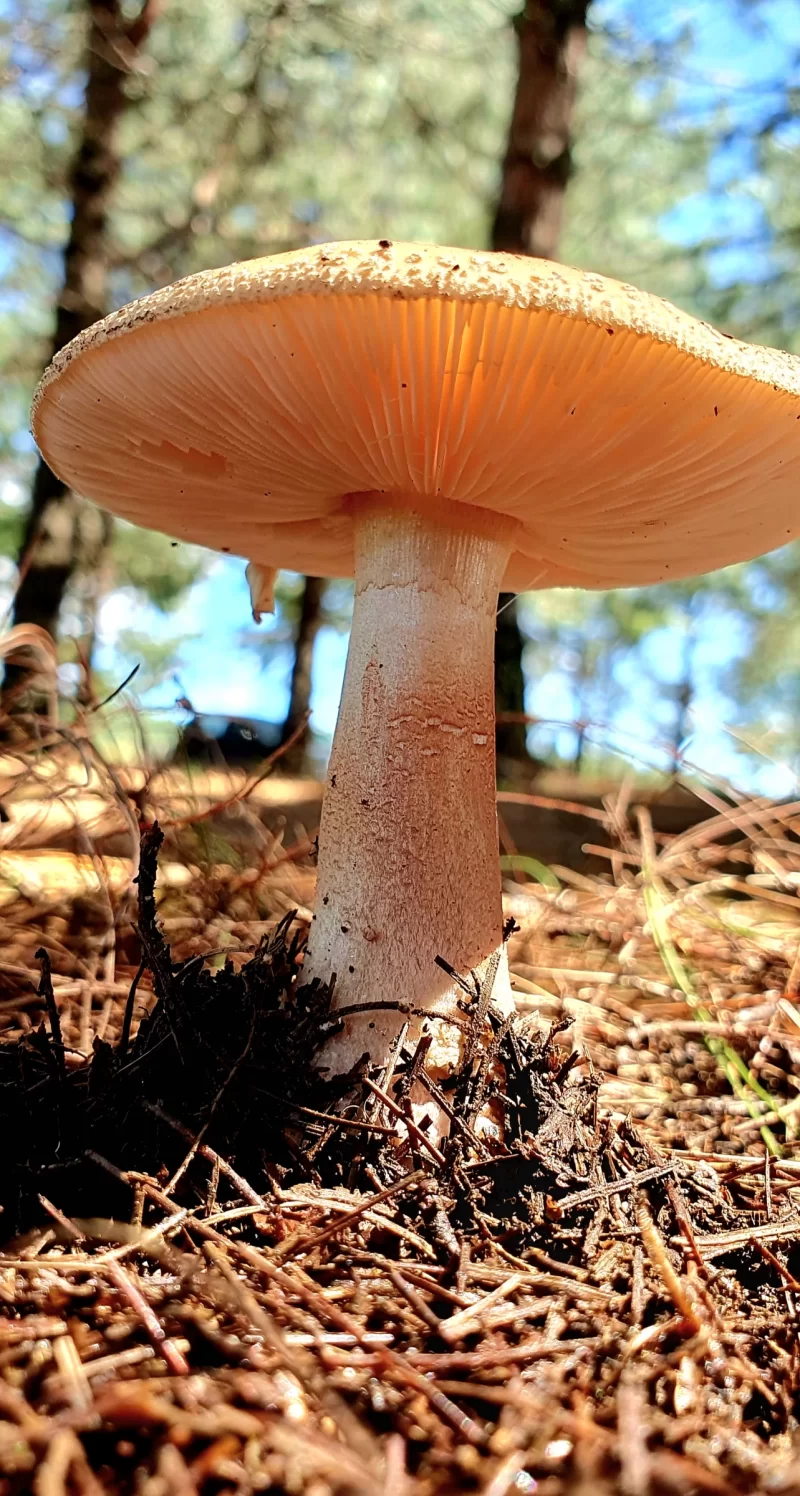
Most people walk straight past them.
That is the idea behind the Mushroom Meanders in the Dargle Valley. Led by local fungi enthusiast Mark Henstock in partnership with the Dargle Conservancy, the walks take people deep into indigenous mistbelt forests to explore the hidden world beneath the trees. “Every time you step into those forests, it feels like entering another world,” says Mark. “The air is crisp, there are waterfalls nearby, and people quickly realise how much life exists around them that they’ve never noticed before.”
The walks attract everyone from photographers and families to complete beginners. Some arrive curious. Most leave fascinated. South Africa is believed to have well over 100,000 fungal species, many of which remain undocumented. According to Mark, KwaZulu-Natal’s rainfall and long wet season make the Midlands an especially rich environment for fungi, with the local season stretching from around September through to May.
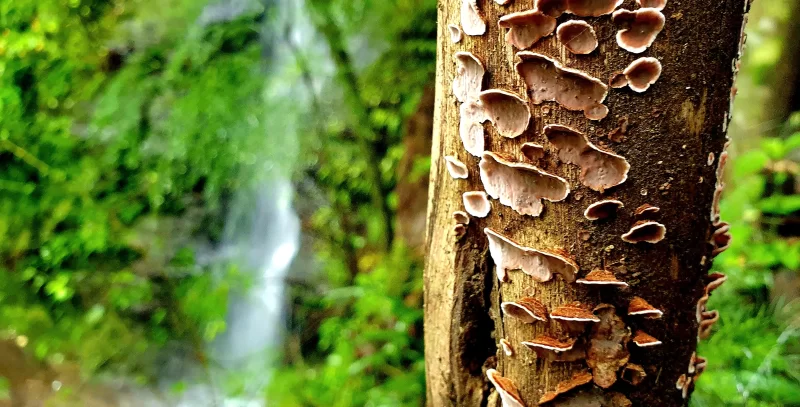
“In the Dargle forests, we regularly find species that we simply cannot identify,” he explains. “Many are likely brand new to science.” On some walks, groups encounter thirty to fifty different species in just a couple of hours. Others produce hundreds. Shapes, colours and textures appear in astonishing variety: vivid red mushrooms clinging to bark, bright blue fungi hidden beneath leaves, tiny translucent growths emerging from fallen logs.
Then there are the stranger discoveries. “We’ve even found what people call zombie fungi,” says Mark. “Fungi that parasitise insects and eventually grow out of them. They’re fascinating.”
For Ashley Crookes, Chairman of the Dargle Conservancy, the walks are about more than simply identifying mushrooms. They reconnect people with the biodiversity of the area itself. “When I first moved to the Dargle, I attended conservancy walks to learn more about the environment and meet people,” he says. “The Mushroom Meanders have become another wonderful way for people to experience the forests, scenery and biodiversity we have here.”
The Dargle Conservancy has long focused on conservation education and environmental awareness, from protecting mistbelt forests to highlighting endangered species such as wattled cranes and southern ground hornbills. The fungi walks now form part of that broader conservation effort, with a portion of proceeds supporting conservancy projects.
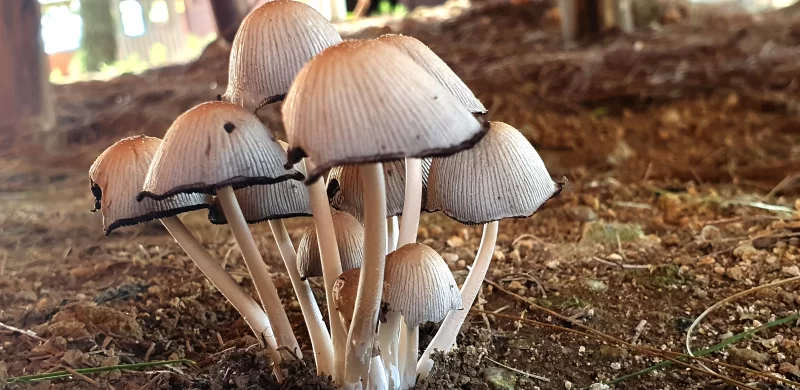
Fungi, after all, are essential to forest health. They break down dead organic matter, recycle nutrients back into the soil and form underground networks that support trees and plant systems. Some local species are, of course, edible, whilst others are widely studied for medicinal use. Mark often introduces walkers to mushrooms such as turkey tail, traditionally associated with immune support, and Reishi, which has long been used in herbal wellness practices. In isiZulu, wild mushrooms are often broadly referred to as amakhowe, and for generations, many communities have foraged seasonal mushrooms after good rains.
At the same time, Mark strongly emphasises caution. “There are highly poisonous mushrooms growing in these forests too,” he says. “People should never eat wild mushrooms unless they are absolutely certain of what they are.”
The learning continues long after the walks end. A growing WhatsApp group called “Midlands Mycology” allows members to share photographs, ask identification questions and compare unusual finds from around the region.
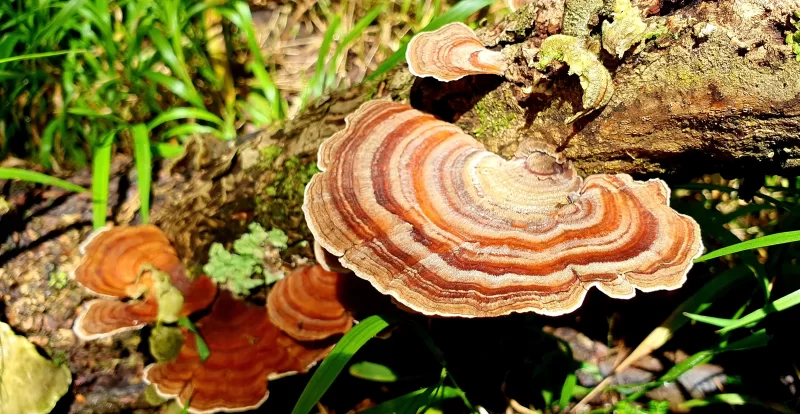
What makes the walks memorable, however, is not only the fungi themselves. It is the experience of slowing down. Families crouch beside fallen logs, examining tiny orange caps. Photographers lie flat in the mud for the perfect image. Children spot mushrooms that adults would normally miss entirely.
And once you begin noticing fungi, it becomes difficult not to see them everywhere, quietly working beneath the forests of the Midlands long after the mist has lifted.
PHOTOS: ASHLEY CROOKES
Written by
Accacia Foggin
Based in the Midlands, Accacia shares her love for community and storytelling through her creative articles.
READ MORE

Built on Care Connected by Community
by The Midlands Writer · September 11, 2026

Countryside Chukkas
by Accacia Foggin · August 7, 2026
Fulfilling Artists’ Needs
by Alicia du Plessis · August 7, 2026